
What is 180 Degrees Celsius Integrated into Fahrenheit Conversion?
Exploring the Celsius and Fahrenheit Scales
Applications of 180 Degrees Celsius in Everyday Life
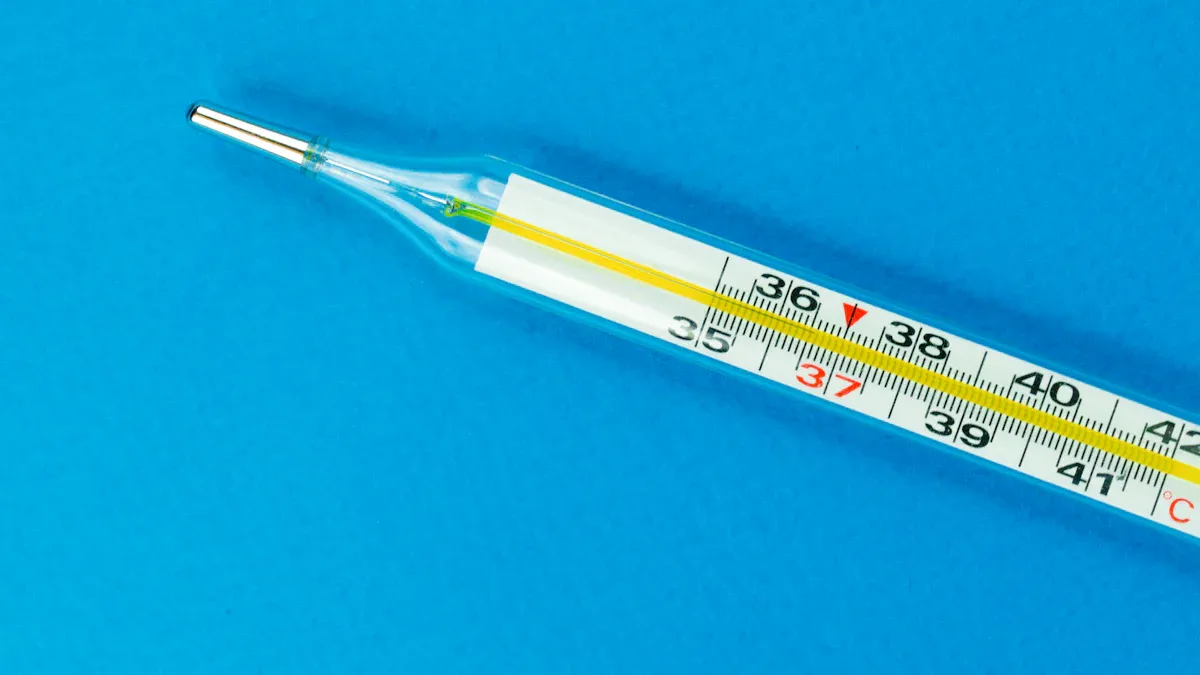
Understanding temperature conversions can simplify your daily tasks. For example, 180 degrees Celsius equals 356 degrees Fahrenheit. This conversion is essential when cooking or baking recipes that use different temperature scales. Knowing what is 180 degrees celsius integrated into Fahrenheit ensures you bake cakes at the right temperature or roast vegetables perfectly. Accurate conversions like this prevent errors and improve results in the kitchen and beyond. Mastering this knowledge makes your work easier and more precise.
Key Takeaways
-
180 degrees Celsius is the same as 356 degrees Fahrenheit. Knowing this helps you follow recipes correctly.
-
Use the formula F = (C × 9/5) + 32 to change Celsius to Fahrenheit. This helps you get the right temperature.
-
Always heat your oven to 180 degrees Celsius before cooking. This makes sure your food cooks evenly.
-
Check your math twice to avoid mistakes. Even small errors can ruin your food.
-
Use online tools or apps to quickly convert temperatures. These tools save time and help you be more accurate.
What is 180 Degrees Celsius Integrated into Fahrenheit Conversion?
The Celsius to Fahrenheit Formula
To convert Celsius to Fahrenheit, you use a simple formula:
Fahrenheit = (Celsius × 9/5) + 32.
This formula helps you understand how temperatures on the Celsius scale relate to those on the Fahrenheit scale. It’s especially useful when working with recipes or instructions that use different temperature systems.
The formula works by first scaling the Celsius temperature to match the Fahrenheit system’s range. Then, it adjusts for the Fahrenheit scale’s starting point, which is 32 degrees higher than Celsius. Knowing this formula ensures you can confidently answer questions like “what is 180 degrees celsius integrated into Fahrenheit?”
Step-by-Step Conversion Process
Converting 180 degrees Celsius to Fahrenheit is straightforward when you follow these steps:
-
Multiply 180 by 9 to get 1620.
-
Divide 1620 by 5 to get 324.
-
Add 32 to 324 to get the final result of 356 degrees Fahrenheit.
This process ensures accuracy and eliminates guesswork. Whether you’re baking a cake or roasting vegetables, knowing how to convert temperatures precisely helps you achieve the desired results.
Tip: Write down the formula and steps somewhere handy, like on a sticky note or in your recipe book. This way, you can quickly convert temperatures without needing to look them up every time.
Importance of Accurate Temperature Conversion
Accurate temperature conversion matters in many situations. For example, when you bake a cake, the oven temperature must be precise to ensure even cooking. If you miscalculate and set the oven too high or too low, the results can be disappointing.
Temperature conversion also plays a role in scientific experiments and industrial processes. In these fields, even small errors can lead to significant problems. By mastering the formula and understanding “what is 180 degrees celsius integrated into Fahrenheit,” you avoid mistakes and improve your outcomes.
Note: Always double-check your calculations, especially when working with critical tasks like cooking or scientific measurements. Even a small rounding error can make a big difference.
Exploring the Celsius and Fahrenheit Scales
Characteristics of the Celsius Scale
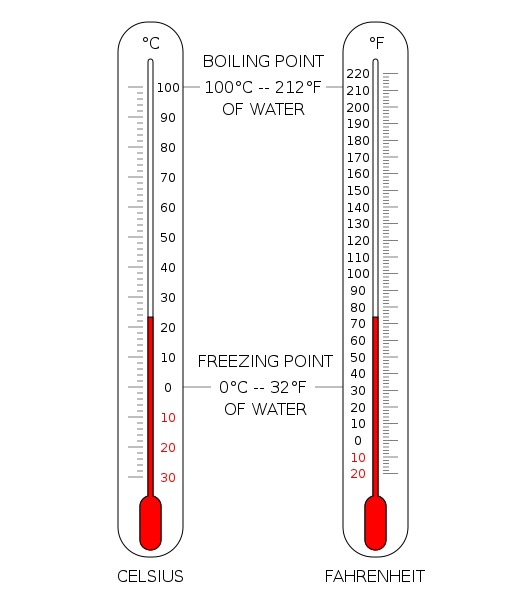
The Celsius scale, created by Anders Celsius in 1742, is one of the most widely used temperature measurement systems. It is based on two fixed points: the freezing point of water at 0°C and the boiling point at 100°C. This scale divides the interval between these points into 100 equal parts, making it straightforward and easy to use.
Originally, Celsius designed the scale with 100°C as the freezing point and 0°C as the boiling point. However, Carolus Linnaeus later inverted it to the format we use today. This change made the scale more intuitive for everyday applications. The Celsius scale is part of the International System of Units (SI), which ensures its accuracy and consistency worldwide.
You’ll find the Celsius scale in scientific research, weather forecasting, and even cooking. Its decimal structure simplifies calculations, making it ideal for precise measurements. For example, when you calculate what is 180 degrees celsius integrated into Fahrenheit, the formula becomes easier to apply due to this structure.
Features of the Fahrenheit Scale
Daniel Gabriel Fahrenheit developed the Fahrenheit scale in 1724. This scale uses 32°F as the freezing point of water and 212°F as the boiling point, dividing the interval into 180 equal parts. The finer resolution of this scale makes it particularly useful in fields like meteorology and industrial processes.
The Fahrenheit scale also includes unique reference points. For instance, 0°F represents the freezing point of a saltwater brine solution, while the average human body temperature was initially set at 96°F (later adjusted to 98.6°F). These reference points reflect the practical applications of the scale during its development.
Today, the Fahrenheit scale is primarily used in the United States and a few other regions. Its association with familiar weather patterns and cultural preferences has kept it relevant despite the global shift toward Celsius.
Differences Between Celsius and Fahrenheit
The Celsius and Fahrenheit scales differ in their reference points, intervals, and usage. Celsius uses 0°C for the freezing point of water and 100°C for the boiling point, while Fahrenheit sets these points at 32°F and 212°F, respectively. This results in a 100-degree interval for Celsius and a 180-degree interval for Fahrenheit.
Celsius is part of the SI system, making it the standard for scientific and international use. In contrast, Fahrenheit remains popular in the United States due to its historical and cultural significance. The Fahrenheit scale’s finer resolution allows for more precise temperature readings, which can be advantageous in specific applications.
When converting between these scales, you use the formula °F = (9/5 × °C) + 32. For example, to determine what is 180 degrees celsius integrated into Fahrenheit, you apply this formula to get 356°F. Understanding these differences helps you navigate between the two systems with ease.
Applications of 180 Degrees Celsius in Everyday Life
Role in Cooking and Baking
You often encounter 180 degrees Celsius when following recipes for baking or roasting. This temperature plays a key role in achieving the perfect texture and flavor in many dishes. For example, caramelization, a process that enhances the taste of food, occurs between 320–400°F (160–204°C). The optimal range for rich flavors lies between 356–370°F (180–188°C). Baking a cake or roasting vegetables at this temperature ensures a golden-brown crust and a deliciously complex flavor.
When you bake cookies or bread, 180 degrees Celsius provides the right balance between cooking the inside and browning the outside. If the temperature is too low, the food may remain undercooked. If it’s too high, the outer layer might burn before the inside is ready. This is why many recipes specify this temperature as a standard.
Tip: Always preheat your oven to 180 degrees Celsius when baking. This ensures even heat distribution and consistent results.
Use in Scientific and Industrial Processes
In scientific and industrial settings, 180 degrees Celsius serves as a benchmark for various processes. For instance, in laboratories, this temperature is often used for sterilizing equipment. It effectively eliminates bacteria and other microorganisms without damaging the tools.
In manufacturing, 180 degrees Celsius is critical for curing certain materials, such as adhesives and coatings. This temperature ensures the materials harden properly, providing durability and strength. Additionally, industries that produce food products rely on this temperature for processes like pasteurization and drying.
You might not realize it, but the same temperature you use for baking a cake also plays a vital role in creating safe and durable products.
Why 180 Degrees Celsius is a Common Standard
You may wonder why 180 degrees Celsius appears so frequently in recipes and industrial guidelines. The answer lies in its versatility and effectiveness. This temperature provides a middle ground that works well for a wide range of applications.
In cooking, 180 degrees Celsius allows for even heat distribution, which is essential for consistent results. It’s hot enough to cook food thoroughly but not so high that it risks burning. This makes it a reliable choice for both novice and experienced cooks.
In industrial processes, 180 degrees Celsius offers a balance between efficiency and safety. It’s high enough to achieve the desired results without compromising the integrity of materials. This temperature has become a standard because it meets the needs of various fields, from culinary arts to manufacturing.
When you understand what is 180 degrees celsius integrated into Fahrenheit, you can see how this temperature bridges the gap between different systems. It simplifies tasks and ensures accuracy, whether you’re baking at home or working in a lab.
Avoiding Errors in Temperature Conversion
Common Missteps in Applying the Formula
You might think temperature conversion is simple, but small mistakes can lead to big problems. One common error is forgetting to follow the correct order of operations in the formula. For example, when converting Celsius to Fahrenheit, you must multiply by 9/5 before adding 32. Reversing these steps will give you the wrong result.
Another frequent mistake involves using the wrong formula altogether. Some people confuse the Celsius-to-Fahrenheit formula with the Fahrenheit-to-Celsius formula. This mix-up can cause significant inaccuracies, especially in tasks like cooking or scientific experiments.
Tip: Always double-check the formula before starting your calculations. Writing it down can help you avoid confusion.
Impact of Rounding Errors
Rounding errors might seem minor, but they can have a noticeable impact. For instance, if you round intermediate steps too early, the final result may deviate from the actual value. This is especially critical in fields like climate modeling, where precision matters.
-
Research shows that single precision is reliable only for shallow depths in soil temperature simulations. Double precision, however, maintains accuracy for much deeper levels.
-
Rounding errors in long-term processes, such as permafrost thawing, can lead to incorrect predictions. This highlights the importance of numerical precision in calculations.
Even in everyday tasks like baking, rounding errors can affect the outcome. A slight difference in oven temperature might alter the texture or flavor of your dish.
Note: Use a calculator or digital tool to minimize rounding errors and ensure accuracy.
Tips for Ensuring Accurate Conversion
You can follow a few best practices to improve your temperature conversions:
-
Use the correct formula for the task. For Celsius to Fahrenheit, apply F = (C × 9/5) + 32.
-
Avoid rounding intermediate steps. Complete the calculation first, then round the final result if needed.
-
Keep a reference chart handy for quick checks. This can save time and reduce errors.
Understanding these tips ensures your conversions are precise, whether you’re baking a cake or conducting an experiment. Accurate calculations lead to better results and fewer frustrations.
Tools for Simplifying Temperature Conversion
Online Conversion Platforms
Online platforms make temperature conversion quick and accurate. These tools allow you to input a value in Celsius or Fahrenheit and instantly see the converted result. Many websites also provide additional features, such as explanations of the conversion process or the ability to convert multiple units at once.
Advanced technologies enhance the accuracy of these platforms. For example:
-
Airbnb improved its tracking by using Facebook’s cross-device reporting, which accurately matched user data across devices.
-
Shopify adopted Google Analytics 4 (GA4) to track user actions and customize conversion events.
-
Tools like Google’s and Facebook’s solutions link user identities across platforms, ensuring precise conversions.
These examples highlight how technology ensures reliability in online tools. You can trust these platforms to provide accurate results, whether you’re converting temperatures for cooking or scientific purposes.
Mobile Apps for Quick Calculations
Mobile apps bring convenience to your fingertips. Many apps are designed specifically for unit conversions, including temperature. You can download these apps on your smartphone and use them anytime, even without an internet connection.
Some apps also include features like saving frequently used conversions or offering voice input for hands-free use. This makes them ideal for busy kitchens or on-the-go calculations. Popular apps often update their algorithms to ensure accuracy, so you can rely on them for precise results.
Tip: Look for apps with high user ratings and reviews. These often indicate reliability and ease of use.
Reference Charts for Easy Access
Reference charts provide a simple way to convert temperatures without needing a device. These charts list common Celsius and Fahrenheit values side by side, making it easy to find the equivalent temperature at a glance.
You can print a chart and keep it in your kitchen or workspace. This ensures you always have a quick reference when following recipes or instructions. Charts are especially helpful for those who prefer a visual guide over digital tools.
Note: Laminate your chart to protect it from spills or wear, especially if you plan to use it in the kitchen.
Understanding that 180 degrees Celsius equals 356 degrees Fahrenheit helps you navigate tasks like cooking or baking with confidence. Mastering the conversion formula ensures precise results and eliminates guesswork.
Tip: Use tools like apps or charts to simplify the process and save time.
This knowledge is not just practical—it’s essential. Whether you’re following a recipe or working on a project, accurate temperature conversion makes your work easier and more reliable.
FAQ
What is the easiest way to convert Celsius to Fahrenheit?
You can use the formula F = (C × 9/5) + 32. Multiply the Celsius value by 9, divide by 5, and add 32. For quick conversions, try online tools or mobile apps.
Tip: Memorize the formula for faster calculations when you don’t have access to tools.
Why is 180 degrees Celsius a common baking temperature?
This temperature ensures even cooking and browning. It’s ideal for baking cakes, cookies, and bread. It balances heat distribution, preventing undercooking or burning.
Note: Always preheat your oven to maintain consistent results.
Can I use a Fahrenheit oven for Celsius recipes?
Yes, but you need to convert the temperature first. For example, 180°C equals 356°F. Use a conversion chart or app to avoid errors.
Tip: Mark common conversions on your oven for quick reference.
What happens if I miscalculate the temperature?
Miscalculations can ruin your dish. Baking at the wrong temperature may lead to uneven cooking, undercooked centers, or burnt edges. Accurate conversions ensure success.
Reminder: Double-check your calculations before setting the oven.